Cambodia's Information Chief: Border Rights Rest on Evidence, Not Rhetoric
Cambodia's information minister emphasizes that the border dispute with Thailand must be resolved through evidence and international law, not military positioning or persuasive narratives.
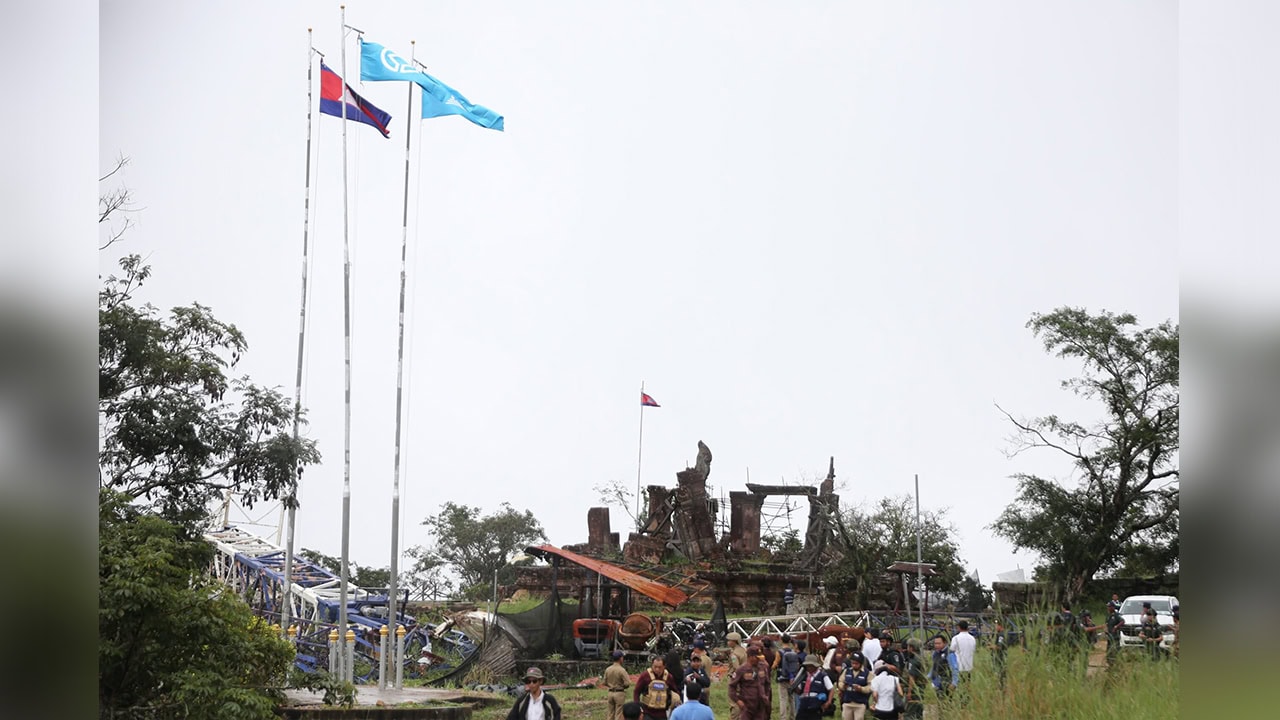
Information Minister Neth Pheaktra has reiterated that resolving the Cambodia-Thailand border conflict requires adherence to documented proof and international legal frameworks, rather than relying on narratives or military deployments to establish territorial claims.
Drawing from the experience of the late Deputy Prime Minister Sok An, a seasoned diplomat who handled border negotiations with Thailand, Pheaktra shared a memorable observation about strategic communication. Sok An reportedly noted that Thai negotiators possessed remarkable skill in framing situations—capable of making significant matters appear trivial while inflating minor incidents into major concerns.
The minister clarified this wasn't meant as a blanket criticism of all Thai diplomats, but rather highlighted the power of language and presentation in shaping both domestic and international opinion on contested issues.
Applying this principle to present circumstances, Pheaktra alleged that Thai military personnel have occupied areas Cambodia considers its sovereign territory, installing barriers including razor wire and shipping containers in what he characterized as an attempt to establish facts on the ground through physical presence.
Cambodia has filed numerous formal diplomatic objections and compiled extensive documentation supporting its territorial assertions.
Thailand has denied accusations of unlawful occupation. Its foreign ministry stated that maintaining military positions following the ceasefire aligns with mutually agreed protocols and should not be construed as territorial seizure.
Bangkok has also accused Phnom Penh of placing fresh landmines in border areas—a charge Cambodian officials dispute.
Pheaktra questioned Thailand's focus on mine incidents that wounded Thai personnel, suggesting this emphasis serves to divert attention from what Cambodia describes as destruction caused by Thai aerial munitions, including MK-82 and MK-84 ordnance, and from allegations of border violations.
Invoking Sok An's approach to the Preah Vihear dispute, the minister emphasized that historical records, tangible evidence, international legal principles, and diplomatic channels remain the proper tools for settling the controversy.
He called on observers to differentiate between assertions made about events and the actual evidence available to verify those claims, noting that while rhetoric may influence perceptions, only documented proof can establish truth, and only legal frameworks—not propaganda or armed force—can legitimately determine where borders lie.